



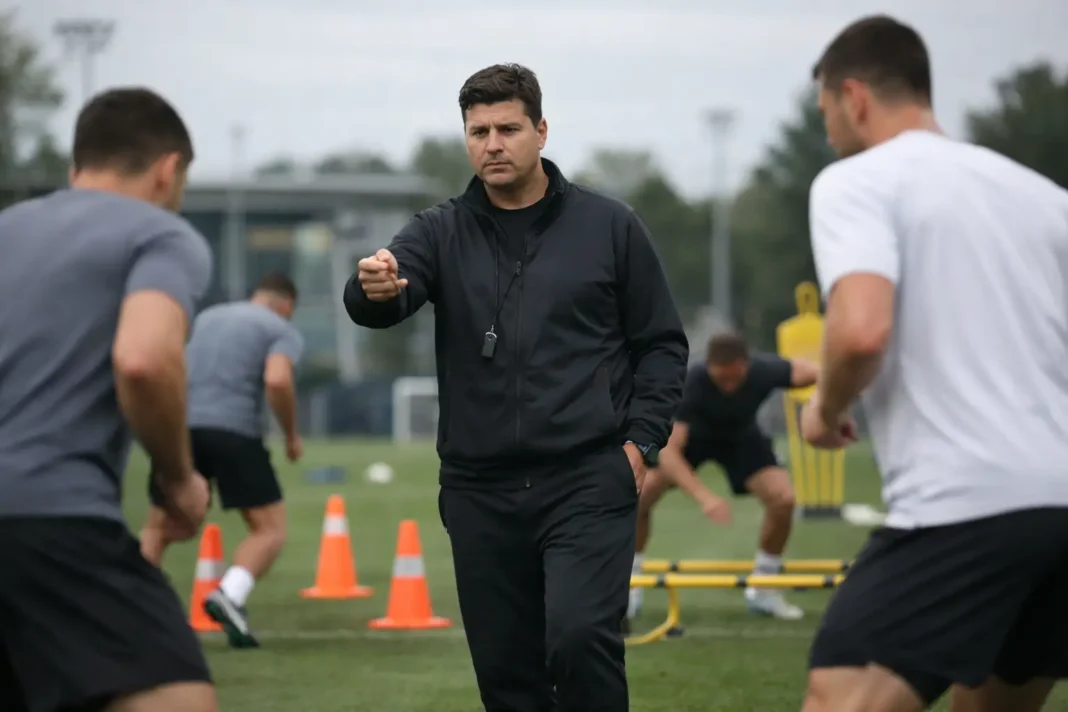
Mauricio Pochettino arrives at Manchester United with a clearly defined reputation: demanding, detail-driven and deeply attached to physical preparation. For a club seeking structure and a sharper competitive identity, his appointment places training intensity and tactical discipline at the centre of the conversation. The view from those who worked with him at Tottenham suggests United players should expect a manager who treats fitness not as a background requirement, but as a core part of how his teams are built.
Toby Alderweireld, who played under Pochettino at Spurs, offers a useful reference point because he experienced that environment from inside the dressing room. His perspective highlights two themes that have long surrounded the Argentine coach: an insistence on high conditioning levels and a desire to control the details of team behaviour. In practical terms, that points to sessions designed to raise physical output, improve coordination without the ball and reduce the space between tactical instruction and match execution.
For supporters of Manchester United, the key question is how quickly those principles can translate into performances. Pochettino’s football has often been associated with energy, compactness and collective responsibility, traits that depend on repeated work rather than individual moments alone. At a club where scrutiny is constant, the challenge is not only to impose standards but to make them visible in results, selection choices and the rhythm of play across a demanding Premier League season.
The reference to control is particularly relevant. It does not simply describe a coach who wants authority; it points to an approach in which positioning, pressing triggers, recovery runs and training habits are connected. That can benefit younger players who need clear instruction, while also testing senior figures expected to adapt quickly. A manager with Pochettino’s profile is unlikely to rely on reputation alone. The dressing room will be judged by how closely it follows the physical and tactical requirements set during the week.
United’s supporters are therefore entitled to expect a visible shift in working culture as much as in team shape. Pochettino’s task will be to turn demanding methods into consistency, and to ensure that intensity does not remain a training-ground concept. Alderweireld’s insight from their Tottenham years suggests the message will be direct: standards first, collective effort next, and only then the footballing identity United are looking to rebuild.

