



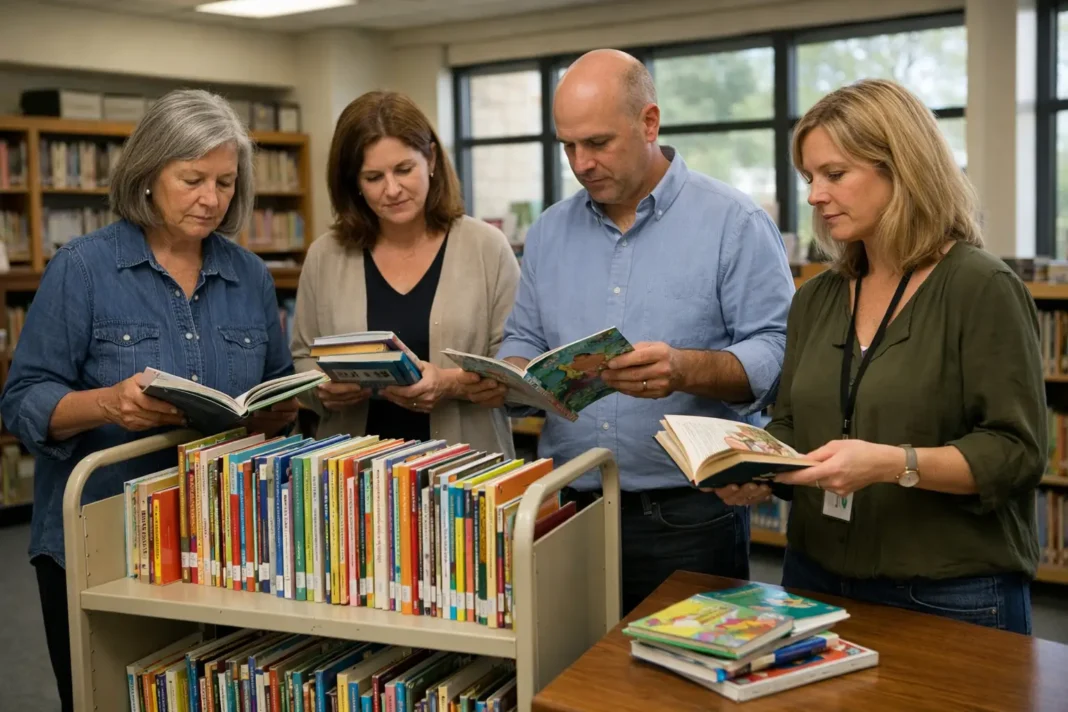
Schools and families are facing renewed questions over how to handle books by David Walliams, after allegations against the children’s author led some schools to remove his titles from library shelves. The response has placed teachers, librarians and parents in a sensitive position, balancing children’s access to popular fiction with concerns about the conduct of a prominent public figure.
The issue is particularly complex because David Walliams is not only a widely recognised name in children’s books, but also an author whose titles are often encountered in school reading spaces and family homes. Decisions about whether to keep, withdraw or review books are rarely straightforward. In educational settings, they can involve questions of safeguarding, age suitability, literary value and the message a school sends to pupils and parents.
For libraries, the challenge is different but no less delicate. Public and school collections are expected to provide broad access to reading while also responding to community concerns. Removing a book from display, restricting access or keeping it available can each be interpreted as a statement. That makes internal review procedures important, especially when allegations relate to an author rather than the content of a specific title. Clear communication helps avoid confusion over whether a decision is temporary, precautionary or part of a broader policy.
Parents are also left to make their own choices at home. Some may separate the work from the author, while others may prefer to pause purchases or reading until they feel more informed. The debate reflects a wider issue in publishing and education: how institutions respond when concerns arise around a well-known cultural figure whose work is directed at children. In such cases, the decision is not only about one author, but about trust, responsibility and the standards adults apply to material offered to young readers.
No single approach is likely to satisfy every family or school community. What matters most is that decisions are grounded in verified information, transparent policies and the educational needs of children. The removals already made by some schools show that the allegations have moved beyond the private sphere and into classrooms and libraries, where the practical consequences are now being assessed book by book and community by community.