



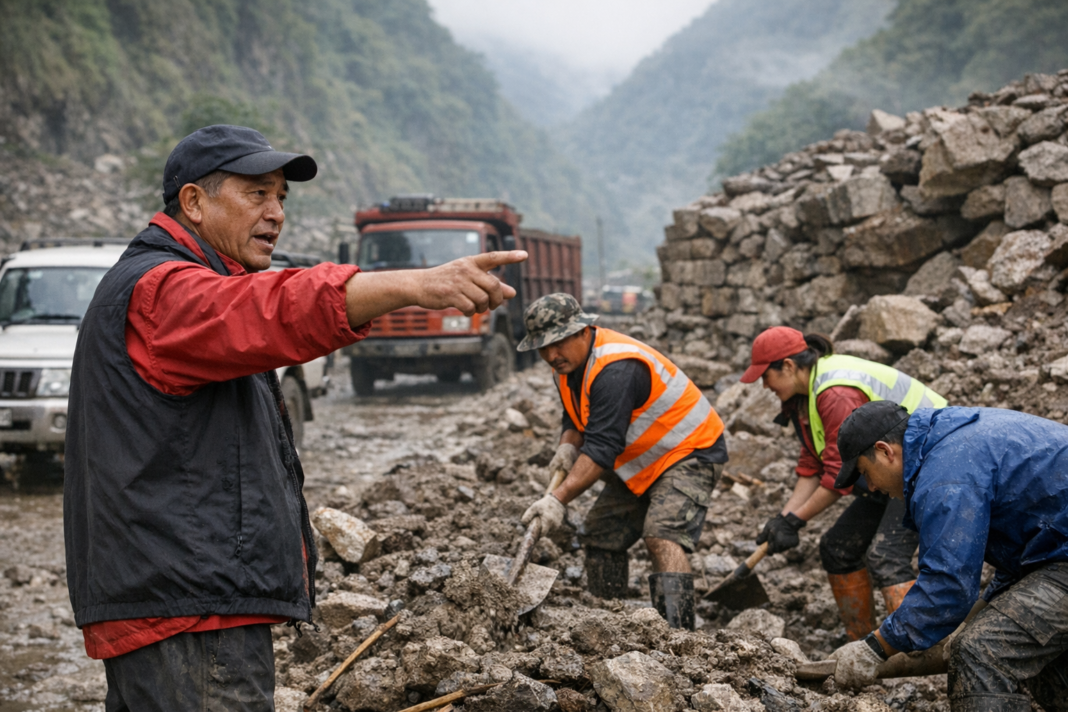
Along the Nepal-Tibet border, communities are at the forefront of rescue and recovery after a flash flood that tore through villages, destroyed roads and bridges, and left more than 1,000 people dead with thousands unaccounted for. Local volunteers, teachers and upstream villagers acted rapidly to warn and evacuate neighbours when the deluge struck, while makeshift shelters and impromptu medical care have kept many survivors alive as formal relief lines struggle to reach cut-off valleys. The scale of infrastructure damage has hampered deliveries of aid and complicated search efforts.
Nepal and Tibet residents describe networks of neighbours, cooperatives and religious groups stepping in where official capacity was overwhelmed. Traditional systems such as guthi — community institutions that manage religious and social functions — and reciprocal labour arrangements known as parma have been repurposed for emergency tasks: clearing debris, transporting the injured and identifying vulnerable households. Local transport operators, restaurants and community forest groups are organising logistics and food distribution, using knowledge of the terrain and local populations to prioritise the worst-affected areas.
Humanitarian organisations and governments face the dual challenge of sustaining immediate life-saving operations while supporting longer-term recovery. When media attention and emergency funding wane, community-led schemes will continue to shoulder rebuilding work: repairing homes, restoring access routes and re-establishing livelihoods. Agencies can increase impact by supplying tools, materials and technical support that complement local labour and coordination, while ensuring reconstruction planning includes the voices and priorities of affected residents.
The path back will be slow. With critical infrastructure still compromised and many families displaced, the emphasis for now remains on search, shelter and basic services. Yet the response emerging from the ground underscores a persistent reality of disasters worldwide: neighbours and local institutions are often the first responders and the most durable resource during recovery. Strengthening those local capacities and linking them with sustained external support will be essential as communities along the border move from immediate survival to rebuilding their future.