



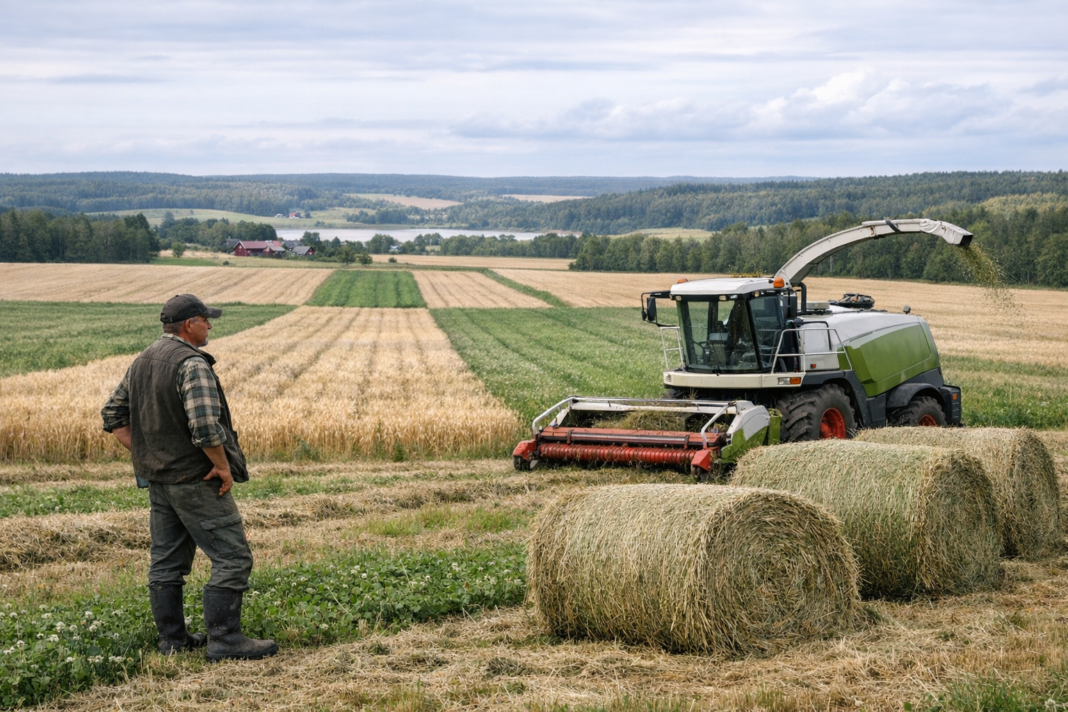
Growing leys—grass and clover remain a longstanding element of cultivation in Swedish agriculture, but their presence varies sharply across regions. In areas dominated by cereal production, mixtures of perennial grasses and legumes are noticeably less common. Farmers and agronomists point to a practical constraint: establishing or maintaining a stand of leys is feasible only when there is a defined market or use for the biomass that is produced.
Historically, leys have been cultivated primarily as fodder for livestock, combining grasses with clover to supply grazing or conserved forage. Beyond that traditional role, such mixtures also fit into broader farm systems as a break in continuous cereal sequences. This rotational function can contribute to crop management strategies on arable farms, and the legume component is known to play a specific role in improving nitrogen availability in the soil.
The limited uptake of leys in cereal-dominated zones underscores the importance of value chains and local demand. Without buyers for hay, silage or other harvested products, arable farmers face an economic disincentive to convert productive cereal land to multi-year leys. At the same time, land-use choices in these districts have implications for soil management, farm resilience and rural economies, factors that shape longer-term planning for both individual holdings and regional agricultural policy.
Debate over the role of leys in modern crop rotations is likely to continue as stakeholders weigh environmental, economic and logistical considerations. For producers, the decision to plant leys hinges on whether harvested material can be integrated into existing markets or farm enterprises. Observers note that any shift in demand for grass and clover products would change the calculus for growers in the cereal belt and could influence crop diversity across Sweden and its farming regions. In this context, discussions among farmers, buyers and policy makers about supply chains and uses for harvested leys remain central to whether these mixtures expand beyond traditional livestock areas.
