



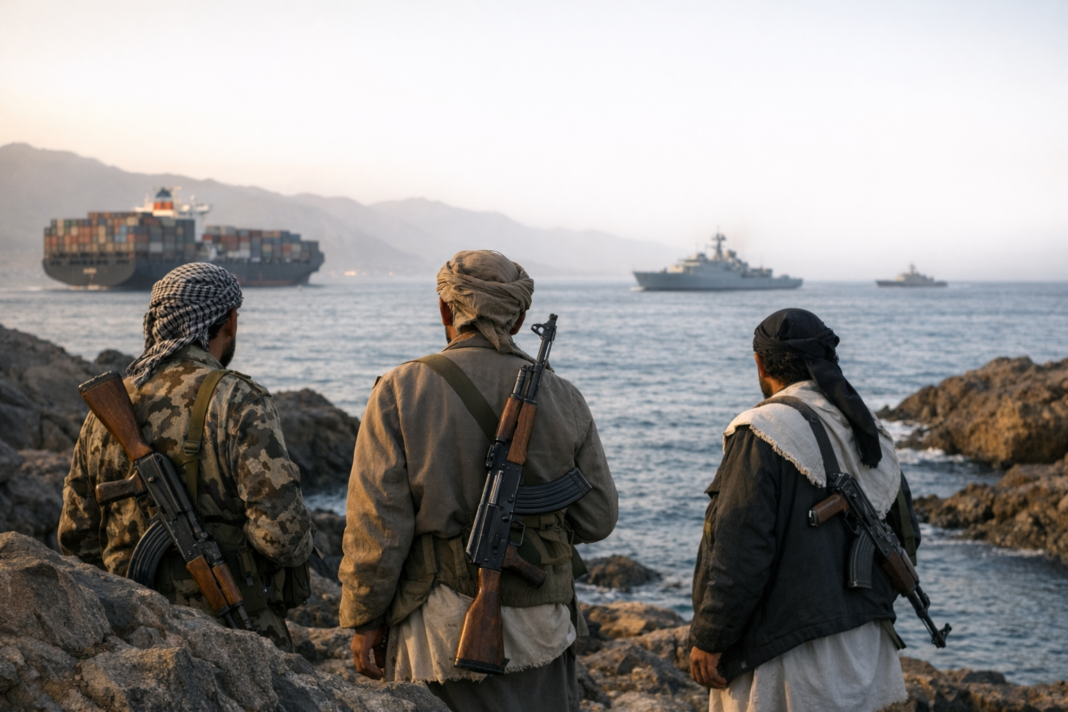
The Houthi advance along the western littoral has rapidly altered the military and political map of Yemen. In early September Houthi forces moved to seize key coastal positions, taking the port of Mokha, nearby islands and stretches of shoreline that control the Bab el‑Mandeb choke point. The push, launched on Sept. 3 and consolidated within days, displaced large numbers of civilians; the United Nations has reported more than 100,000 people fleeing the new front lines.
The operation has immediate regional reverberations. By holding access to a principal passage for ships entering and exiting the Red Sea, the Houthis have created leverage that mirrors Tehran’s capacity to menace the Strait of Hormuz. Observers note this both amplifies Iran’s bargaining position in its confrontation with Western powers and complicates Saudi energy routes. Since March, Tehran has also been reported to charge fees for safe passage through Hormuz, and Yemeni security sources have said senior Iranian commanders, including Abdul Reza Shahlai, were present during recent operations—details that underline the international dimensions of what remains a domestic war.
Houthi leaders have framed the campaign as a response to years of blockades and to a July attack on Sanaa’s airport that ended a fragile ceasefire. The group appears to calculate that seizing coastal terrain will force Saudi Arabia and other external actors back to negotiation by raising the cost of the status quo. Political messaging from Sanaa has included measures to restore port activity, cut fees and distribute aid in captured districts—moves intended to demonstrate governance capacity and to claim popular legitimacy.
Yet the gains carry substantial risks for the Houthis at home. Military control of territory and maritime approaches does not equate to broad-based political consent across Yemen. A decade of Houthi administration in Sanaa has shown a preference for centralized, coercive rule rather than inclusive power‑sharing. The recent measures in Mokha resemble tactical governance and public relations more than a durable national settlement. They also invite intensified military response from opponents and external backers, risking further civilian harm. In short, the coast and the strait may strengthen the Houthis’ negotiating hand abroad, but they do little to resolve the core legitimacy deficit that will determine Yemen’s future.