



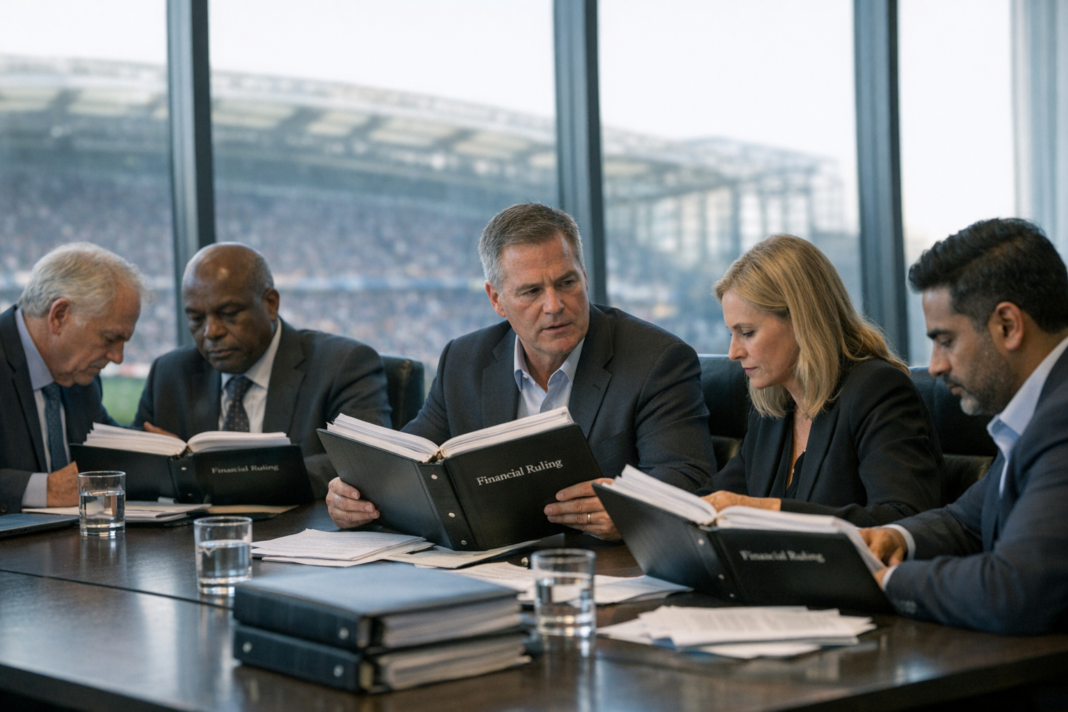
Manchester City faces a landmark challenge after an independent body found the club guilty of most of the financial breaches alleged in the case launched in 2023. The ruling concerns conduct during an era of sustained success between 2009 and 2018, following the club’s 2008 acquisition by the Abu Dhabi United Group. The scale of the findings — and the uncertainty over any eventual penalty — has immediate implications for the club’s sporting record and for how professional football governs financial conduct.
The charges cover multiple areas, including the accuracy of accounts provided to the Premier League, player and manager remuneration, and compliance with continental rules. The full written decision has not been published and no sanction has been announced; an appeal by the club is expected, and Manchester City continues to dispute wrongdoing. Until the commission’s reasoning is public, observers caution against drawing firm conclusions about appropriate penalties.
Possible sporting measures range from fines and points deductions to more extreme outcomes such as relegation or the retrospective removal of trophies. Past cases offer limited guidance: Everton had a ten-point deduction reduced on appeal, while Nottingham Forest faced a four-point penalty. In other sports, precedent exists for stripping titles — most notably the National Rugby League’s sanctions against the Melbourne Storm — and rugby’s Premiership has seen relegation for salary-cap breaches at Saracens. Each instance, however, relied on distinct facts, making direct comparisons difficult.
The potential impact extends beyond a single club. The City Football Group holds interests in multiple teams worldwide, and published findings that address governance or cross-club transactions could prompt scrutiny of the ownership structure across jurisdictions. Separately, several domestic rivals have signalled interest in legal claims seeking compensation, though such actions would require proof that any breach produced measurable financial loss. With appeals likely and broader political and investment ties involved between the United Kingdom and the United Arab Emirates, the dispute is set to remain a defining test of football’s capacity to police modern, internationally connected club ownership models.