



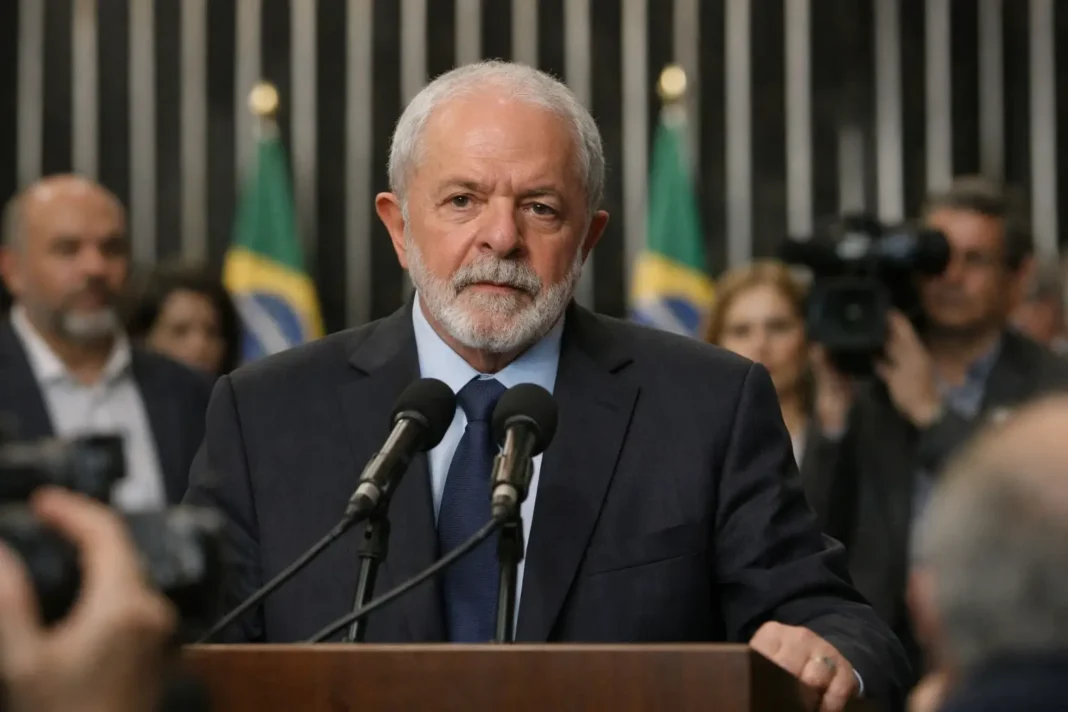
Luiz Inácio Lula da Silva has secured a fourth non-consecutive term as president of Brazil, overturning a first-round deficit that had placed far-right candidate Flávio Bolsonaro in a commanding position. The runoff result breaks a pattern established under Brazil’s post-1988 electoral system: until now, every candidate who led the first round of a presidential contest had gone on to win the second. Lula’s turnaround, after trailing by about 2.2 million votes three weeks earlier, restores him to the center of Brazilian power at the age of 80.
The scale of the reversal gives the outcome historic weight. No Brazilian president has been elected to four terms, and by the end of the new mandate Lula will have led the country for 16 years in total. That would make him the longest-serving democratically elected president in Brazil’s history, surpassed in overall time in power only by Getúlio Vargas, whose rule spanned dictatorship, revolution and elected office. The result also confirms Lula’s continuing ability to assemble broad electoral coalitions in moments of acute political pressure.
The campaign between the two rounds became a national mobilization rather than a conventional contest dominated by television advertising. Supporters of both candidates moved onto the streets and social platforms, reflecting the intensity of a polarized electorate. Lula’s camp reactivated discouraged voters after a weak first-round performance, broadened alliances and reached citizens whose vote was driven as much by opposition to Bolsonaroism as by loyalty to the Workers’ Party. The defeat of Flávio Bolsonaro, son of jailed former president Jair Bolsonaro, also carries regional significance at a time when far-right movements have gained ground across parts of Latin America and Europe.
The immediate political challenge is not resolved by victory. Jair Bolsonaro has not conceded and has said he will seek annulment of the vote, while prominent far-right figures have questioned the result. Tensions were sharpened on election day by disputes over alleged voter suppression and whether polling hours should be extended, involving Brazil’s Superior Electoral Court and the Supreme Federal Court. Even if institutional procedures hold, the controversy gives the defeated side a political narrative at a moment when online hate speech and street-level political violence are already serious concerns.
Lula’s next term will be dominated by governability. He faces a conservative majority in Congress, numerous right-wing state governors and a political system marked by institutional fatigue. Budget decisions, appointments and reforms are likely to require difficult negotiations, while fiscal pressure and declining trust in democratic institutions remain unresolved. His inauguration on January 5 will open a mandate shaped less by the drama of his comeback than by the need to stabilize Brazilian politics and renew democratic participation beyond the figure of a single leader.