



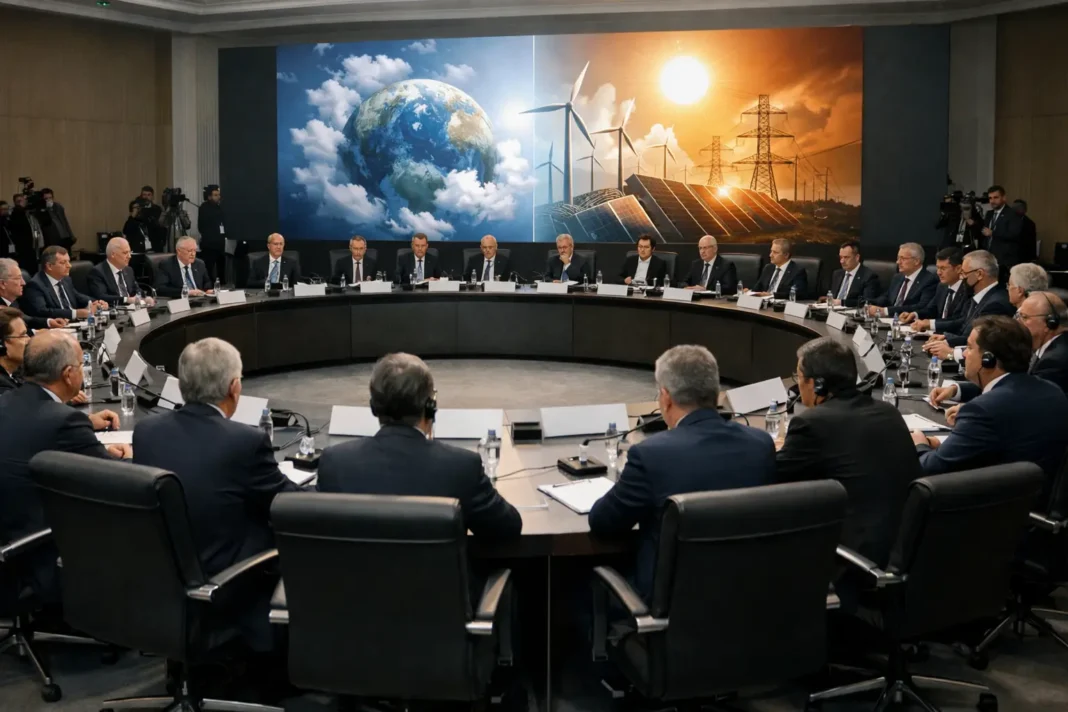
World leaders arrive in Antalya this week for COP31, the annual United Nations climate conference, at a moment when confidence in global cooperation is under pressure. Around 80 leaders are expected in the Turkish coastal city, including Australian Prime Minister Anthony Albanese. For the first time, the summit’s responsibilities are split: Turkey is hosting the event, while Australia is leading the negotiations. The arrangement gives the meeting an unusual diplomatic profile as governments face competing crises, from wars to the economic disruption of artificial intelligence, while the impacts of climate change intensify across borders.
The COP process has often been criticised for slow progress, but it remains the main forum where nearly all countries negotiate shared climate commitments. Its roots go back to the 1992 climate framework agreed in Rio de Janeiro under the United Nations Framework Convention on Climate Change. Since then, annual conferences have built a system based on consensus, a rule that gives agreements broad legitimacy but often limits their ambition. That tension is visible again at COP31: countries are still not on a path consistent with agreed temperature goals, and the United States has withdrawn from the process, narrowing the political space for a stronger deal.
The benchmark remains the Paris Agreement, adopted in 2015, which aims to limit warming to 1.5°C above pre-industrial levels and requires global net-zero emissions around mid-century. National climate plans have shifted projected warming down from the roughly 4°C trajectory expected before Paris, but current commitments still fall short. The latest round of targets points to a possible 2.6°C outcome, while global emissions were roughly flat in 2025 as lower land-use and wildfire emissions offset continued growth from fossil fuels. More than 130 countries have set long-term net-zero goals, and earlier COP decisions have already moved language from reducing coal use to transitioning away from fossil fuels.
In Antalya, the most closely watched proposal is a global electrification target widely described as “35 by 35”. The aim is to raise electricity’s share of final energy delivered to consumers from just above 20% today to 35% by 2035. Turkey and Australia are backing the push, which would support wider use of electric vehicles, heat pumps, cleaner industrial processes and modernised power grids. Analysis from the International Energy Agency links faster electrification to lower emissions and reduced fossil fuel import bills, estimated at $720 billion a year. The target may also be more diplomatically achievable than direct new language on phasing out oil, gas and coal.
The talks will not resolve the climate crisis on their own, but their practical influence lies in setting signals for markets and governments. Clean energy investment has reached A$3.2 trillion globally, twice the level of investment in coal, oil and gas, while renewables have overtaken coal as the world’s largest source of electricity. If COP31 secures a credible electrification commitment, it would not replace the need for deeper emission cuts, but it could give the energy transition a clearer international direction at a time when climate diplomacy is being tested.