



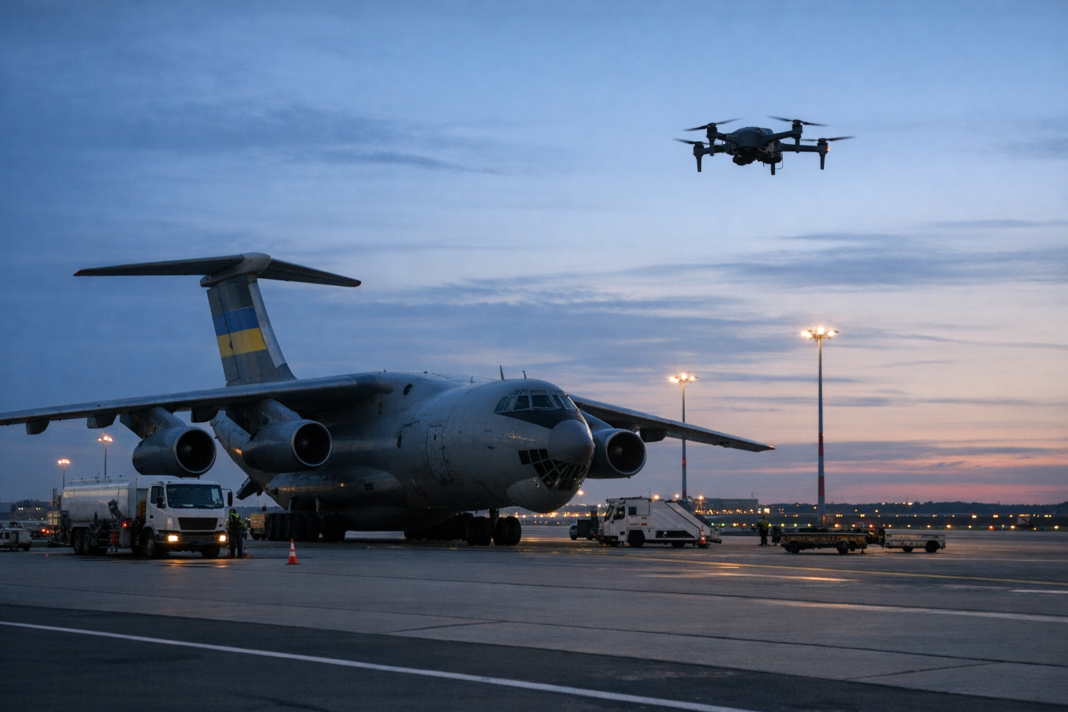
Explosives-laden drone attack investigators concluded that an unmanned aircraft carrying explosives deliberately targeted a Ukrainian cargo aircraft at Leipzig/Halle airport in early August. The finding, made public by German authorities on Tuesday, was accompanied by a formal statement from the German government attributing responsibility to Russia. Officials described the device as an explosive payload mounted on the drone but did not disclose operational details or identify the investigative bodies by name.
The incident has prompted a technical probe into the drone’s origin, flight path and guidance systems. Investigators are reported to be analysing debris and electronic signatures to establish how the device was controlled and whether it was intended to detonate on impact. The aircraft reportedly targeted belonged to a Ukrainian operator, linking the event to broader security concerns for flights connected to Ukraine and cargo routes serving the region.
Leipzig/Halle airport is a significant logistics hub in central Europe, handling a high volume of freight operations. The use of an explosives-equipped unmanned aerial system against a parked or taxiing cargo aircraft underscores emerging vulnerabilities at airfreight facilities and has drawn attention from aviation and security specialists. Authorities responsible for airport security, aviation safety and criminal investigation are coordinating to assess immediate risks and recommend measures to reduce exposure to similar threats.
The German government’s attribution to Russia marks a notable diplomatic assertion. Public disclosure of state responsibility for an attack on civil aviation is likely to have diplomatic and legal implications that will play out in multilateral fora and bilateral exchanges. For now, investigators say inquiries continue as they seek to produce a fuller technical account of the device, its provenance and the chain of events that led to the attempted strike.
