



The geopolitical implications of the US-Israeli military campaign against Iran dwarf those of the US intervention in Venezuela. While Maduro’s fall disrupted China’s access to Latin American oil and marked a symbolic setback for Beijing’s alliances in the Americas, the strikes on Iran are much more consequential.
For starters, the risk to China’s energy security is much greater, given Chinese oil imports from Iran far outweigh those from Venezuela (13% of total versus 4%). Iran has been supplying discounted crude that bypasses US sanctions, often relabelled as “Malaysian blended oil”. In addition, Iranian oil is virtually all paid in renminbi through China’s International Payment System (CIPS), which makes Iran completely dependent on China for imports as well.
This arrangement has kept Iran’s economy afloat amid Western isolation, while providing Beijing with cheap fuel.
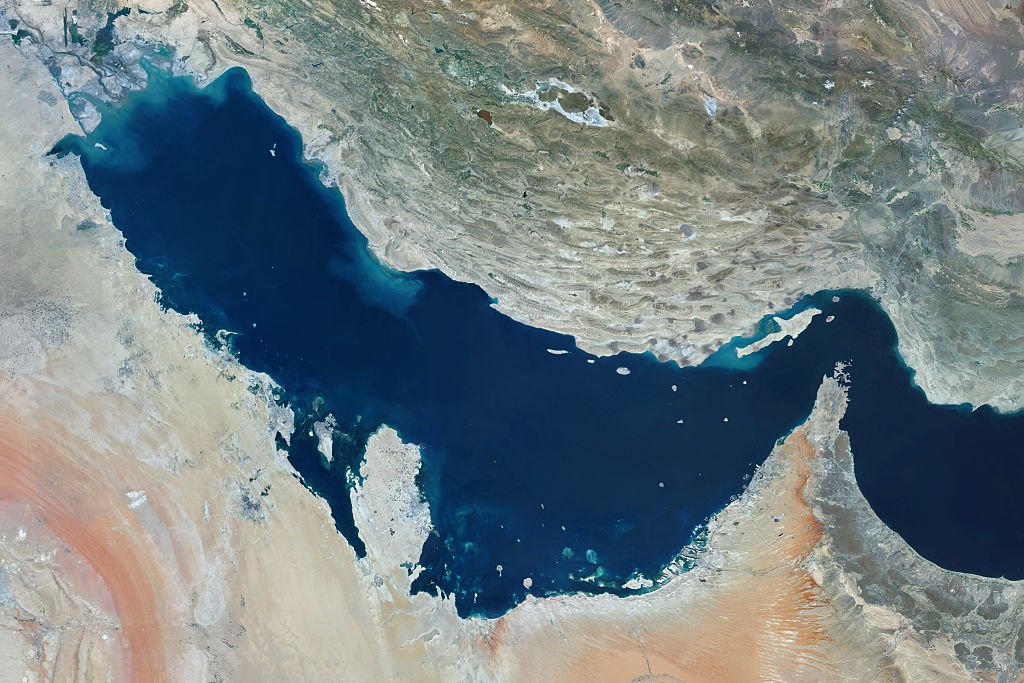
Iran is also more important than Venezuela when it comes to trade, as it lies at the centre of China’s buildup of alternative routes for oil. In particular, one of the key projects within the China-Pakistan Economic Corridor – namely the port of Gwadar, Pakistan – should help China bypass the Strait of Malacca, and potentially even the Strait of Hormuz for Iranian oil via the extension of the Iran-Pakistan pipeline and/or Iran’s Jask oil terminal, only 200 km away from Gwadar.
These potential diversification options are all now being disrupted by the attacks on Iran, and the uncertain future of the Iranian regime.
Well beyond energy security, Iran is crucial for China’s diplomatic prestige and leverage in the great power rivalry with the United States. This is particularly true for the Middle East but also for the Global South, more generally.
China has poured far more diplomatic capital into Iran than Venezuela. In 2021, China signed a 25-year Comprehensive Strategic Partnership, which, in principle, included $400 billion in Chinese investments across Iran’s energy, infrastructure, and tech sectors. So far, only $2-3 billion has been confirmed since 2021.
Nor is it just a hit in investment terms. China orchestrated Iran’s full membership of important clubs, such as the Shanghai Cooperation Organization (SCO) in July 2023, and BRICS in January 2024. While the two memberships certainly helped Iran return to international diplomacy after having been cast out by the West, China – and Russia – also benefited from showcasing their ability to put together anti-Western regimes.
The reality is that both SCO and BRICS members must now wonder what China can offer in the face of Trump’s ire. These doubts will be greater in the Middle East than in the Global South, as the expectations were higher. China notably brokered the March 2023 reconciliation between Saudi Arabia and Iran, which many interpreted as China becoming the diplomatic power of a region long dominated by the US. But this agreement has been lying in tatters since Hamas’ attack on Israel in October 2023.
And while China’s diplomatic power is clearly being tested, it has never been more important economically for the Middle East – and the Global South as a whole – due to increasing dependence on its imports, the jobs it creates through greenfield investment, and for the tech transfer it facilitates.
But the US attack on Iran may still bear a silver lining for China. First off, the cost – and duration – of operation “Epic Fury” is yet to be determined. Trump’s campaign risks entanglement in a quagmire, from Iranian counterstrikes on US bases to proxy escalations in the Red Sea. If Trump falters, Xi’s gains will become clear, as US adventurism is portrayed as reckless.
Secondly, Xi might seek concessions for China’s restraint, especially vis-à-vis Taiwan. The White House has already announced the postponement of a $13 billion arms sale to Taiwan, which had been informally approved by Congress, as Trump readies for an official visit to Beijing on March 31.
Indeed, Trump might be softer on China’s threats to Taiwan as he perceives a lack of support among his European allies for conflict in the Indo-Pacific, as he stated clearly during his speech at the World Economic Forum in January. Since launching the attack on Iran, Trump acolyte Senator Lindsey Graham branded Europe “pathetically soft” for its response to US-Israeli attacks on Iran. It is quite clear that Beijing can only benefit from an even more fractured Transatlantic Alliance as a consequence of the situation in the Middle East.
In sum, the repercussions of Iran will hit China vastly more than Venezuela, and will bring far greater uncertainty for US-China strategic competition. But Beijing’s short-term pain in areas of energy security and its diplomatic sway in the Middle East (and the Global South more generally) could also bring windfalls – not only because Trump’s risky operation may fail, but also for the potentially high price China will make him pay for its acquiescence.
In his haste for a quick gain in Iran, we might wonder if Trump ever considered the implications for Taiwan. And would he have cared?
Why Europe must reject Canada’s tack towards China
In early 2026, European capitals briefly caught “Mark Carney fever.” The new Canadian prime minister’s…
4 minutes
Source:
www.euractiv.com