



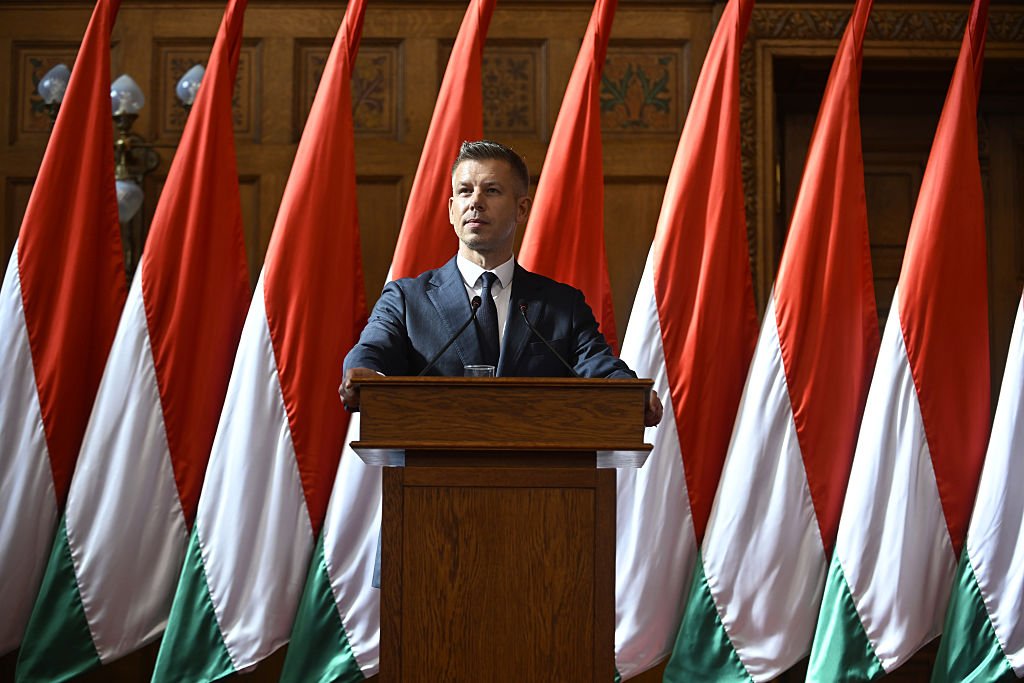
Hungarian lawmakers are expected to approve anti-corruption measures on Tuesday, part of new Prime Minister Peter Magyar’s sweeping reform drive and aimed at helping the country get billions of euros in withheld European Union funds.
The EU announced late last month it would unlock more than €16 billion ($18 billion) for Hungary that had been frozen over rule-of-law concerns during nationalist premier Viktor Orban’s rule, if Budapest stays on track with a major reform push.
Pro‑EU conservative Magyar ousted Orban from office after 16 years in power in an April election, on a promise of “regime change.”
The anti-graft legislation is expected to easily pass a vote in parliament, where Magyar’s party holds more than two-thirds of the seats, enabling it to change key laws and amend the constitution without opposition support.
The vote is scheduled to take place around 10:00 am (0800 GMT).
Anti-graft agency strengthened
The proposed legislation expands the legal powers of the anti-graft watchdog, the Integrity Authority, which was established in late 2022 as part of an earlier EU-mandated reform package.
Under the new regulations, the organisation will scrutinise asset declarations and can seek continuation of anti-corruption investigations through the courts and suspend procurement processes to protect EU funds.
In addition, the legislation prescribes stricter transparency requirements for the ownership structures of private equity funds.
It also orders public interest asset management foundations, so-called KEKVAs, to be dissolved, with the state reclaiming assets granted to these entities under Orban’s rule estimated to be worth a total of 8.5 billion euros.
The bill also tightens the rules around politicians’ annual asset declarations, criminalising deliberate omissions.
The EU froze billions of euros in funds earmarked for Budapest because of democratic backsliding, graft concerns and the restricting of LGBTQ rights under Orban’s rule.
The money – which Magyar said adds up to about 13% of Hungary’s budget – could help his government revive the country’s flagging economy.
EU officials said if all steps are completed in time, Budapest could expect the first disbursement before the end of the year.
Public media overhaul
Parliament is also expected to pass a bill on reforming the generously funded state-run media, which Orban was accused of turning into propaganda organs for his party and government.
As part of the overhaul, a television and radio broadcaster will be established from the existing public media companies, while news agency MTI will be a separate non-profit once again.
Under the new rules, parliament would allocate budgets to the new organisations, which are expected to be less than the approximately 450 million euros they were earmarked for this year.
Company directors will be terminated under the bill, with culture minister Zoltan Tarr assuming leadership during an interim period, until new managers are selected through a professional tender.
The bills, along with several other proposed laws adopted in recent weeks, were fast-tracked through parliament, prompting criticism that Magyar like his predecessor Orban is rushing through legislation.
On Monday, lawmakers are also due to vote to change procedural rules, temporarily raising the cap on urgent deliberations and exceptional procedures until the end of the year.
(cz)
Source:
www.euractiv.com
