



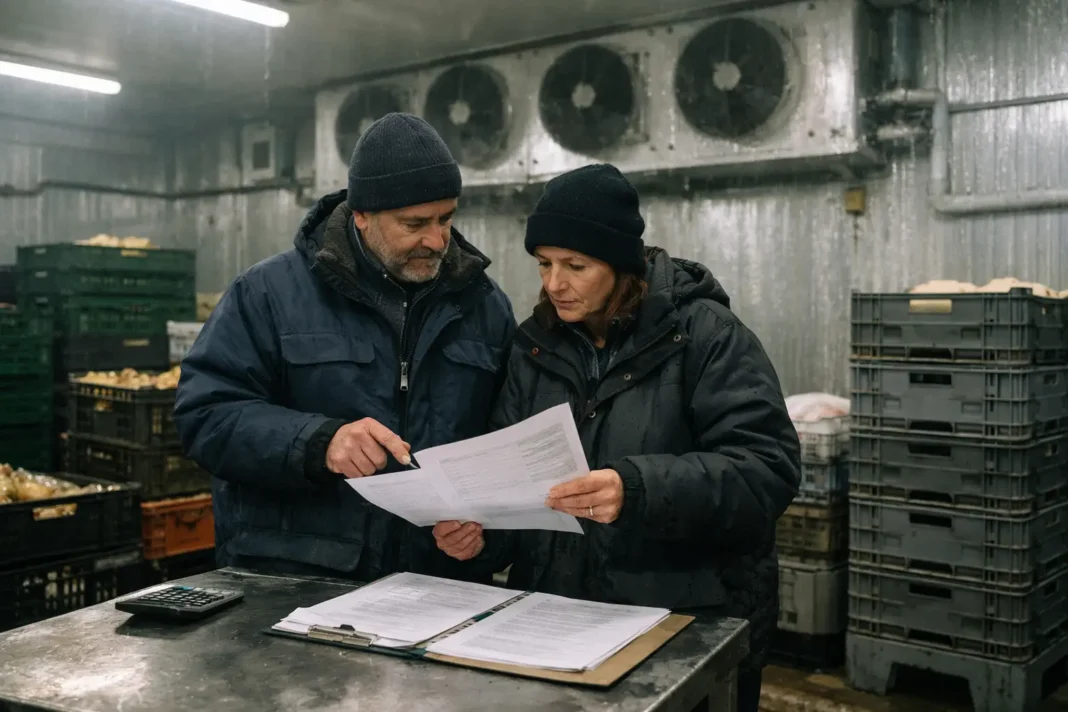
Scotland’s small food producers face barriers that could prevent them from accessing funding needed to reduce emissions linked to refrigeration, research by Heriot-Watt University has found. The findings focus on small food and drink businesses, where chilled storage is central to daily operations and where energy challenges can directly affect both costs and climate performance.
The research highlights a practical problem at the intersection of Scotland’s food economy and the transition to lower-carbon business practices. Keeping produce cold is essential for safety, quality and supply continuity, but it also creates a persistent energy demand. For smaller firms, the ability to invest in more efficient systems can depend on whether funding schemes are accessible in practice, not only available in principle.
Small and medium-sized enterprises are often expected to take part in emissions reduction efforts alongside larger companies, yet the study identifies financial and operational obstacles that may leave them at a disadvantage. If support mechanisms are difficult to reach or poorly aligned with business realities, firms that most need help with energy-intensive processes risk being excluded from measures designed to accelerate decarbonisation.
The issue is especially relevant for the food and drink sector, where cold storage underpins everything from raw ingredients to finished products. Funding that works poorly for smaller operators can have consequences beyond individual businesses: it may slow progress on reducing emissions across supply chains and weaken the resilience of local producers already managing energy pressures as part of their operating costs.
The Heriot-Watt University research points to a need for funding approaches that take account of the scale and capacity of smaller enterprises. For policymakers, lenders and support bodies, the challenge is not only to finance cleaner refrigeration and related energy improvements, but to ensure that small firms can realistically access that support before climate targets and commercial pressures move further out of reach.
