



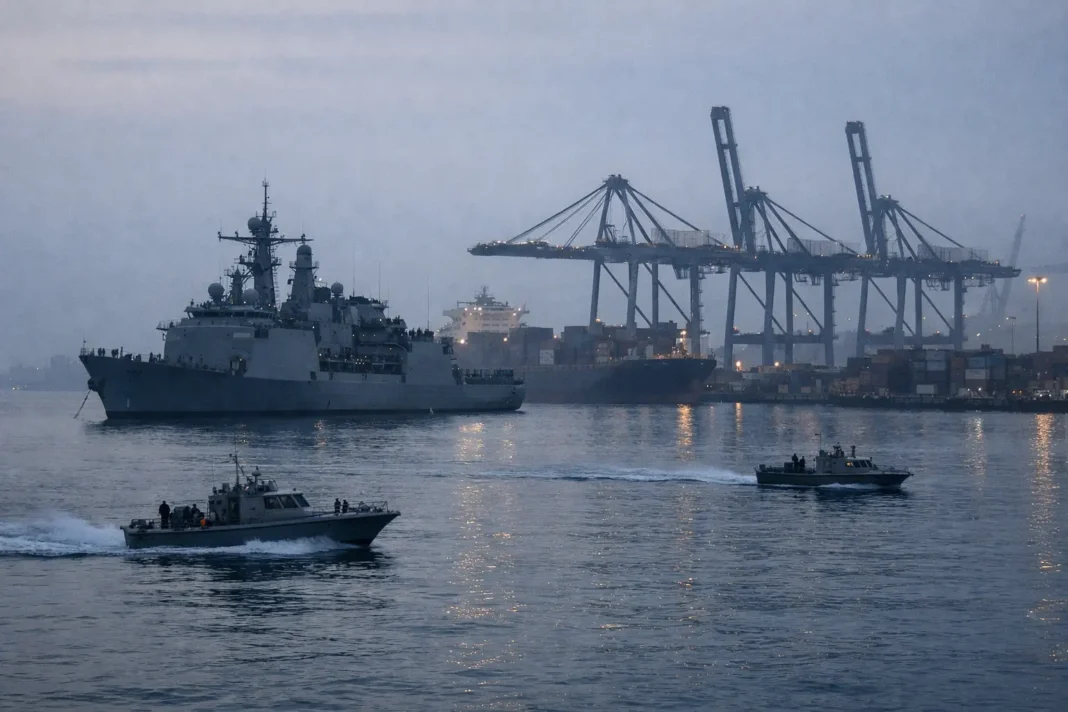
Ukraine’s maritime strikes against Russian assets abroad have put renewed attention on the international reach of the Ukraine war. Ukrainian forces disabled a Russian cargo vessel off Finland, sank the Russian corvette Merkury in Libyan waters and damaged another cargo ship in the same area. The operations followed severe damage inflicted on the Kerch Strait Bridge, the strategic link between Russia and occupied Crimea, and showed Kyiv’s ability to hit Russian military and logistical interests far from the main battlefield.
The attacks come during a year in which the front line has offered Ukraine little movement toward ending the conflict. Russian aerial strikes have intensified, while uncertainty surrounding Washington’s diplomatic posture has added pressure on Kyiv. At the same time, Moscow continues to absorb enormous human losses, with reported Russian deaths ranging from more than 400,000 to significantly higher estimates. For Ukraine, widening the vulnerability of Russian assets is one way to raise the cost of the war for Vladimir Putin’s government without relying solely on advances along entrenched land positions.
The conflict has never been confined to Ukrainian territory. Since Russia’s full-scale invasion in 2022, Ukraine has depended on military and financial support from allies, including air-defence systems and economic aid needed to maintain public services. Russia, after failing to secure a rapid victory, expanded its own external support network. Iran and North Korea have provided important assistance, while China has offered Moscow an economic outlet amid sanctions. Countries in Central Asia and the Middle East have also served as routes for sanctioned goods, reinforcing the war’s global supply chains.
That international structure has made overseas pressure increasingly relevant. Russia has used hybrid methods in Europe, including drone activity, sabotage and airspace violations, to unsettle the continent that remains Ukraine’s principal backer. Ukraine, by contrast, has targeted Russian assets linked to Moscow’s broader power projection, from the Baltic region to Africa. The strikes in Libya and near the Baltic Sea reflect a contest in which logistical networks, ports, vessels and political narratives are part of the same war effort.
Volodymyr Zelenskyy’s acknowledgement of Ukrainian involvement in the attack on the Russian warship off Libya gave the campaign a public dimension. The United Nations has warned against allowing Libya to become another stage in the conflict, but the latest incidents underline a broader reality: the war has long been shaped by foreign support, sanctions, supply routes and covert action. The sinking and disabling of Russian vessels abroad have made that global dimension harder to ignore.