



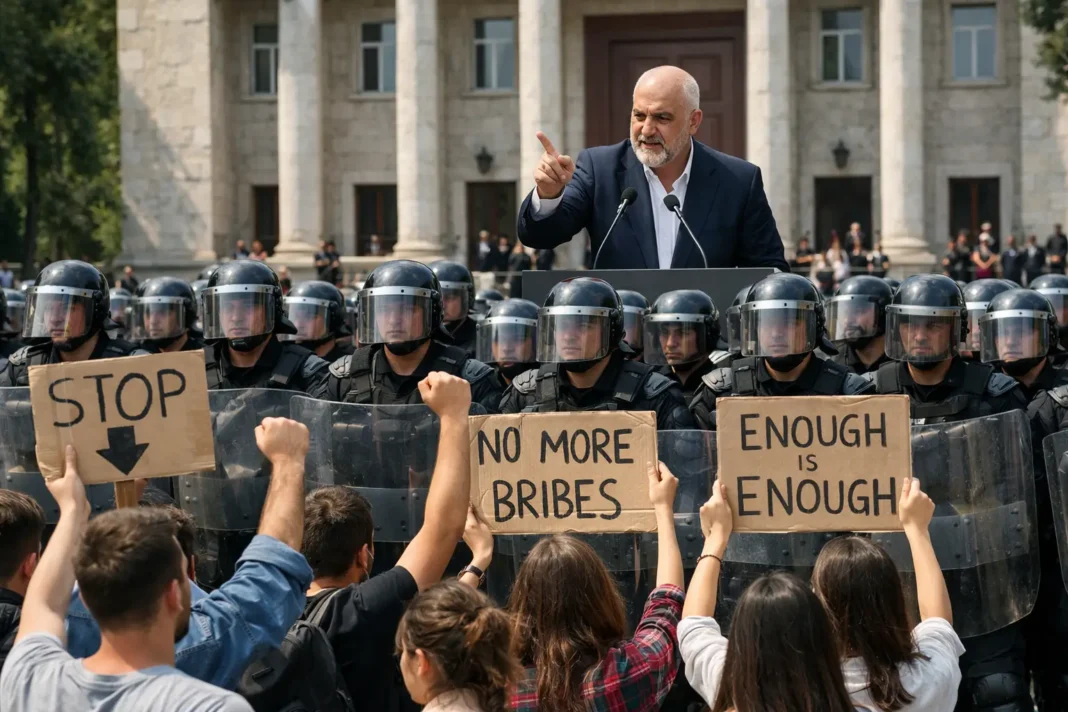
Student protests swell in Albania as waves of young demonstrators press anti-corruption demands and authorities move to contain the unrest. The mobilization, driven primarily by students and other young citizens, has repeatedly met intervention by the Albanian police, prompting clashes that have intensified the debate over public order and citizens’ rights. At the center of the political argument is Edi Rama, who has attributed parts of the unrest to “antifa” actors — an explanation that many participants and onlookers have dismissed.
Protesters say their actions aim to highlight persistent grievances tied to corruption and lack of accountability in public life, framing the demonstrations as a demand for systemic change rather than the work of organized foreign agitators. The composition of the crowds — largely composed of students and recent graduates — underscores a generational element to the unrest, with young people seeking more visible responses from political leaders and institutions.
The state’s response has involved efforts to suppress gatherings and clear protest sites, measures that government officials describe as necessary to preserve public order. Those moves, together with the prime minister’s characterization of the movement, have hardened positions on both sides and complicated opportunities for dialogue. Analysts and participants note that labeling the protests as the product of external extremist groups risks delegitimizing genuine civic complaints and narrowing space for mediation.
The episode highlights broader challenges for governance in Albania, where concerns over corruption and the political inclusion of younger cohorts are recurring themes. How authorities address the current wave of demonstrations — balancing enforcement with avenues for accountability and reform — will shape the domestic conversation about political legitimacy and the role of civic mobilization in shaping policy. For now, the protests remain a focal point for questions about responsiveness, legitimacy and the future engagement of young citizens in public life.