



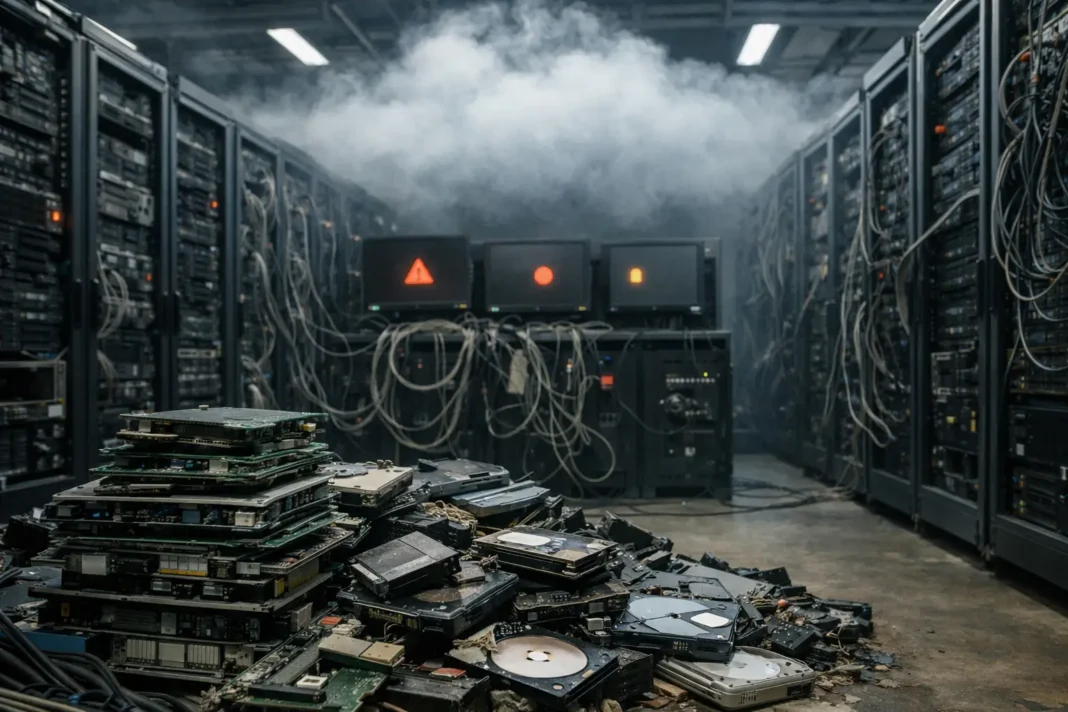
A global Outlook disruption on November 13, 2026 offered a practical reminder of how deeply office life now depends on a small group of technology platforms. When email, calendars and meeting tools fail, the interruption is not only technical: it affects productivity, coordination and business continuity. The episode also revived a broader question for companies and public bodies: whether reliance on a single software ecosystem can create costs that are difficult to see until access is interrupted.
The issue reaches beyond convenience. The digital economy depends on physical infrastructure: data centres, cooling systems, hardware supply chains and electricity grids. The International Energy Agency estimates that data centres used 415 terawatt-hours of electricity in 2024, around 1.5% of global demand, and projects consumption could rise to 945 terawatt-hours by 2030. Microsoft reported a 25% year-on-year increase in total emissions in 2025, linked mainly to expanding data centres and changes in renewable-energy certificate accounting, while also investing in cleaner energy and more efficient infrastructure.
Those pressures are entering climate diplomacy. At COP31 in Turkey, the voluntary Antalya artificial intelligence pledge has placed cleaner AI and digital systems on the agenda, including their energy and water demands. The World Resources Institute welcomed the direction of the pledge while stressing the need for stronger accountability. The International Telecommunication Union has scheduled a COP31 event on November 16 focused on financing greener digital infrastructure, measuring emissions and encouraging durable, repairable and reusable electronics.
Software choices can also influence hardware turnover. Regular support for Windows 10 ended in October 2025, with extended security updates available for eligible consumer devices until October 2027. Such transitions do not automatically make older computers unusable, but compatibility and support rules can affect replacement decisions. The UN-backed global e-waste monitor, published by the International Telecommunication Union, found that the world generated 62 million metric tonnes of electronic waste in 2022, with only 22.3% documented as formally collected and recycled. The same assessment linked e-waste to about US$78 billion in externalised costs, including pollution and climate-related impacts.
The financial side of cloud computing is equally important. Subscription fees are visible, while staff training, data migration, equipment replacement, duplicate systems and exit costs are often harder to quantify. In March 2026, the UK Competition and Markets Authority announced plans to examine Microsoft’s business software ecosystem and noted steps by major cloud providers, including Microsoft Azure and Amazon Web Services, to reduce data-transfer charges and improve interoperability. For buyers, resilience now means more than keeping systems online: it requires portable data, open formats, credible emissions reporting and contracts that preserve the freedom to switch.
