



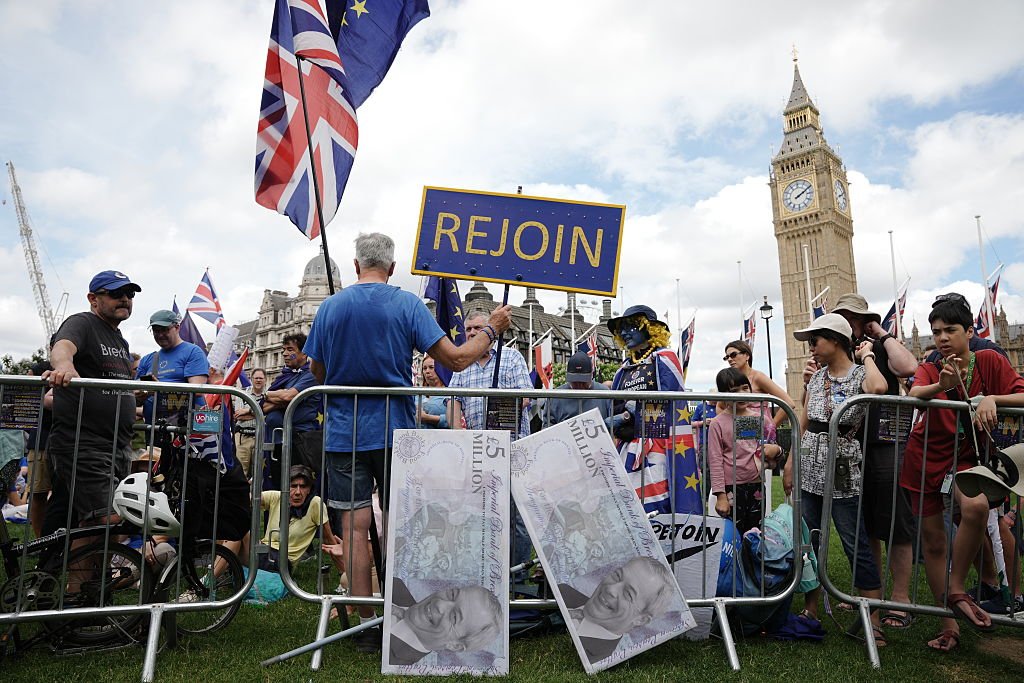
When I mentioned to a friend the other day that we’ve arrived at the tenth anniversary of the Brexit vote, he looked surprised and asked if Brexit is “still a thing?”
Of course it is, I replied. Brexit happened, it’s still happening, and it’s very much “a thing”.
My friend said that obviously he knew that Brexit was still with us, but he thought that everyone had more or less accepted our fate, for better or worse, and we were all getting on with our Brexity lives.
If that were the case, I said, why would the British Prime Minister be bracing himself for a special EU-UK summit on 22 July, which was being billed as the culmination of months of “reset negotiations”? The President of the European Commission, Ursula von der Leyen, had declared it “a new era in UK-EU ties”, although no one thought it could produce major results towards the UK rejoining the EU club.
The summit has now been cancelled. But Brexit is destined to remain “a thing” for quite a while yet.
Times are certainly changing: the leaders of the Leavers aren’t saying very much positive about the Brexit legacy these days while many polls indicate that Brexit has been an economic failure and that the UK economy is 6–8% smaller than if the UK had stayed in the EU.
Starmer is a symptom of Britain’s deeper malaise
Sir Keir Starmer seems to have survived another day – but for how many more,…
5 minutes
One poll says that 61% of Brits now think leaving the EU was the wrong decision, not least because it increased red tape for small UK businesses trading with the EU and has landed British citizens (and their travelling pets) with more bureaucracy, cost and delays when they enter any of the EU’s 29-country Schengen Area countries.
The allowance of 90 days every 180 days that Brits can be within these countries sounds simple enough, until it turned out that the 180 days is “not fixed to a calendar but is a continuously moving window” – a condition so complicated that the European Commission kindly offers a free 90-day-rule online calculator to work it all out. But the gesture is spoiled by the reminder that the indication produced by the calculator “does not constitute a right to stay for a period resulting from its calculation”.
In particular, we should spare a thought for those Brits who own holiday homes in EU countries – mostly France, Spain and Portugal – many of whom voted for Brexit without realising that the 90-day rule would curb their holiday home visits. The curtailment of free movement in Europe, coupled with unfulfilled promises from Leavers of better international trade deals and tougher immigration laws, partly explains the steady decline in support for Brexit since the referendum.
But it certainly doesn’t signal support for a rush back into the EU’s arms: a recent YouGov poll shows 70% of Britons support a closer EU relationship without rejoining the bloc, its Single Market or its Customs Union.
Any eventual summit will be a test of how flexible the current crop of EU leaders is prepared to be after a decade in which approaches from UK political Remainers for more access to beneficial EU policies have been dismissed as attempts at “cherry-picking” of access to the EU single market after having voted to leave.
However many more prime ministers the UK has in the next decade, I guarantee that Brexit as “a thing” will still be high on the UK-EU agenda.
Source:
www.euractiv.com
